Your first surfboard can either speed up your progress-or make surfing feel impossible.
For most beginners, the choice comes down to two options: a forgiving soft top or a more performance-focused hard top. Pick the wrong one, and you may spend more time falling, fighting the board, or losing confidence than actually catching waves.
Soft tops are stable, safer, and easier to learn on, while hard tops offer sharper turns, better speed, and more long-term progression. But the “best” board depends on your size, skill level, local waves, and how serious you are about improving.
This guide breaks down soft top vs hard top surfboards in practical terms, so you can choose your first board with confidence-and avoid an expensive mistake.
Soft Top vs Hard Top Surfboards: Key Differences in Construction, Safety, and Performance
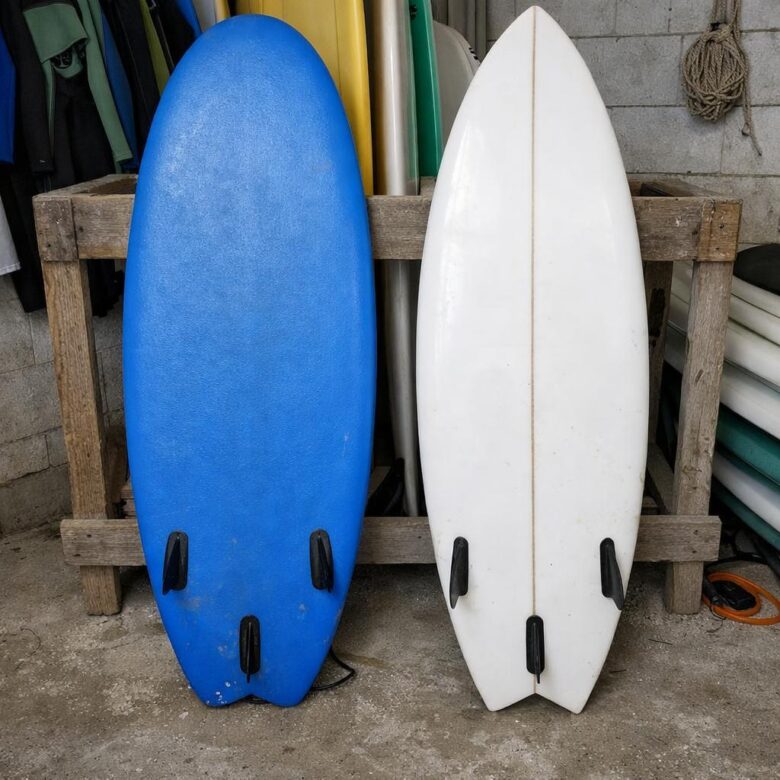
Soft top surfboards use a foam deck, usually with an EPS foam core and slick plastic bottom, while hard top surfboards are commonly built with fiberglass, epoxy resin, or polyester over a foam core. That construction difference affects price, durability, repair cost, and how the board feels under your feet. If you are comparing surfboard rental options or buying your first beginner surfboard, this is the detail that matters most.
From a safety standpoint, soft tops are more forgiving. The foam deck reduces impact if the board hits your body, which is why many surf schools and surf camps use brands like Wavestorm for first lessons. In real beginner lineups, especially on crowded summer beach breaks, a soft top can prevent small mistakes from turning into expensive ding repair or an injury.
- Soft top: safer, cheaper, easier to paddle, ideal for beginners and small waves.
- Hard top: faster, more responsive, better rail control, preferred as skills improve.
- Repair needs: hard boards often need fiberglass or epoxy repair kits; soft tops usually tolerate bumps better.
Performance is where hard tops pull ahead. A fiberglass or epoxy surfboard has sharper rails and better flex, so it turns cleaner and holds speed on steeper waves. For example, a beginner may catch more waves on an 8-foot soft top at a mellow beach, but that same surfer will likely want a hard top funboard or longboard once they start trimming, turning, and surfing faster conditions.
How to Choose Your First Surfboard Based on Skill Level, Wave Conditions, and Budget
Your first surfboard should match where you are now, not where you hope to be in six months. If you are taking surf lessons, catching whitewater, or still working on balance, a soft top longboard in the 8-9 ft range is usually the smartest buy because it offers stability, float, and lower injury risk.
Wave conditions matter just as much as skill level. For small, slow beach breaks, choose more volume and length; for cleaner, slightly steeper waves, an epoxy hard top funboard may make sense once you can paddle, pop up, and turn consistently. Check local conditions on Surfline before buying, because a board that works in mellow summer waves may feel wrong in punchy winter surf.
- Beginner: 8-9 ft soft top, ideal for lessons, rental-style use, and small waves.
- Improving beginner: 7-8 ft foam or epoxy funboard for better turning without losing paddle power.
- Budget buyer: compare used surfboards, but avoid deep pressure dents, water damage, or loose fins.
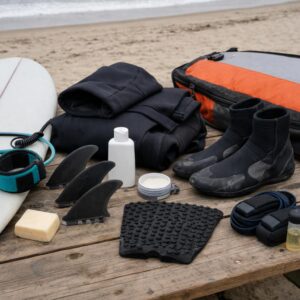
As a real-world example, a 170 lb beginner surfing knee-to-waist-high waves once a week will progress faster on an 8 ft foam board than on a 6 ft shortboard, even if the shortboard looks more advanced. Also factor in the full surfboard cost: leash, fins, wax, board bag, wetsuit, roof rack, and possible surfboard repair can add up quickly.
If your budget is tight, start with a quality soft top or a used board from a reputable surf shop instead of the cheapest online option. You’ll get safer equipment, better resale value, and advice that actually fits your local break.
Common Beginner Surfboard Mistakes: When to Avoid a Hard Top or Upgrade from a Soft Top
One of the most common beginner mistakes is buying a hard top surfboard too early because it “looks more real.” If you are still nose-diving, losing the board in whitewater, or struggling to paddle straight, a soft top is usually the safer and smarter investment. It reduces injury risk, handles small bumps better, and keeps your surfboard repair cost low while you build control.
A hard top can be the wrong choice if you surf crowded beginner breaks, travel without a roof rack, or share the board with family members. I’ve seen new surfers crack a fiberglass board on their first beach day simply by dropping it in a parking lot. That turns a fun session into a ding repair quote, and sometimes the repair costs more than a weekend surfboard rental.
- Avoid a hard top if you cannot consistently paddle into waves without help.
- Stay on a soft top if safety, durability, and budget matter more than performance.
- Upgrade from a soft top when you can angle takeoffs, trim across the wave, and control turns.
Before upgrading, check local conditions on Surfline and compare them with your actual skill level, not your goal level. A performance hard board makes sense when the waves have shape and you are no longer just surviving the takeoff. If your surf lessons instructor says you are ready for a mid-length epoxy board or funboard, that is usually a better next step than jumping straight to a shortboard.
Closing Recommendations
Your first surfboard should make progress feel easier, not more frustrating. If you’re still learning to paddle, pop up, and handle wipeouts, a soft top is usually the smarter first choice: it’s forgiving, stable, and less intimidating in crowded beginner waves.
Choose a hard top only if you already have solid basics, surf regularly, and want sharper performance as your skills grow. The best decision is simple: buy the board that matches your current ability, not the surfer you hope to become later. Confidence in the water matters more than prestige on the sand.