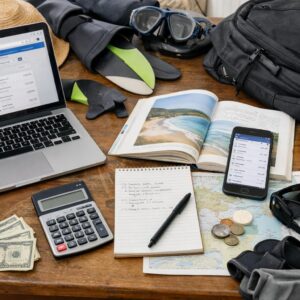
Forget one small surf item, and your dream trip can turn into an expensive scramble before the first paddle-out.
Packing for a surf trip isn’t just about boards and bikinis-it’s about being ready for reef cuts, board dings, changing swell, airline fees, and remote breaks where replacements are hard to find.
This essential surf trip packing checklist covers the gear travelers actually need: surf equipment, protection, repair tools, travel documents, health basics, and smart extras that make the difference between surviving the trip and scoring it.
Surf Trip Packing Fundamentals: Essential Gear, Travel Documents, and Safety Must-Haves
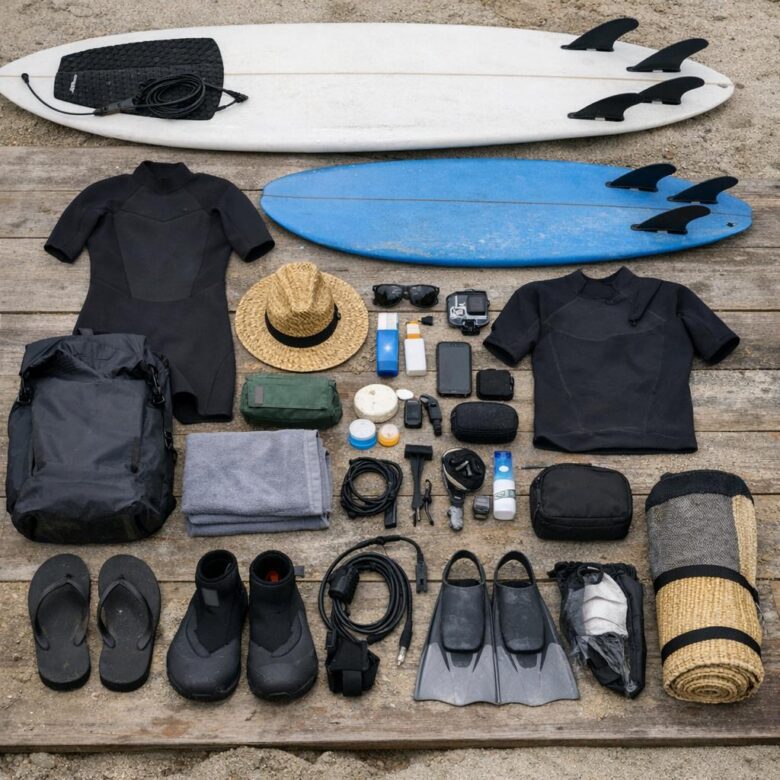
A smart surf trip packing list starts with the items that protect your board, your body, and your budget. Use a padded surfboard travel bag, fin keys, spare fins, ding repair kit, leash, wax for the right water temperature, and a compact wetsuit or rash guard based on the destination forecast.
Before booking, check airline surfboard baggage fees and size limits, because the cost can change dramatically between carriers. For example, flying to Costa Rica with two boards may require prepaying oversized sports equipment fees, while some airlines treat surfboards as standard checked luggage if they fit within the weight limit.
- Travel documents: passport, visa if required, flight details, hotel booking, surf camp confirmation, and copies stored in Google Drive.
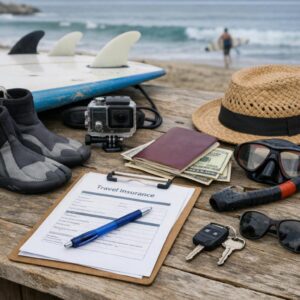
- Safety essentials: reef-safe sunscreen, first aid kit, earplugs, hydration tablets, waterproof phone pouch, and travel insurance with surfing coverage.
- Board protection: rail guards, pipe insulation, bubble wrap for the nose and tail, and a luggage scale to avoid airport surprises.
Travel insurance is worth reviewing carefully, not just buying the cheapest plan. Look for emergency medical coverage, board damage protection, trip cancellation benefits, and clear wording around “adventure sports” or surfing-related injuries.
One practical habit from real surf travel: keep one fin set, leash, wax, and swimwear in your carry-on if possible. If your checked board bag is delayed, you can still rent a board locally and surf the first day instead of losing a session.
How to Pack a Surfboard Bag for Flights, Road Trips, and Remote Surf Destinations
Start with a quality padded surfboard travel bag, ideally one with 10mm foam, reinforced rails, and internal compression straps. Before flying, check airline surfboard baggage fees and size limits, then weigh the bag with a digital luggage scale to avoid expensive excess baggage charges at the airport.
Remove fins, leash, and wax, then wrap the nose, tail, and rails with pipe insulation, towels, or wetsuits. I’ve seen boards survive rough airline handling better when the deck and bottom are separated with cardboard, especially on long-haul routes where bags are stacked under heavy luggage.
- Pack fins, fin key, wax comb, and screws in a small pouch so they do not pressure-ding the board.
- Place wetsuits, rash guards, and surf booties around the rails for extra impact protection.
- Add a basic ding repair kit, but keep resin or sharp tools compliant with airline security rules.
For road trips, secure the bag flat inside the vehicle when possible, or use locking roof rack straps if the boards must go on top. A soft rack is fine for short distances, but for highway driving or rental cars, a proper rack system from Thule or similar brands is safer and helps reduce board movement.
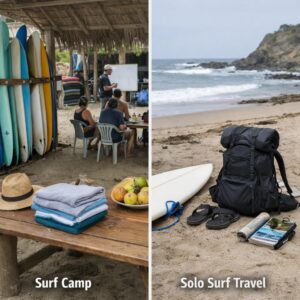
For remote surf destinations, pack spare leash strings, extra fins, reef-safe sunscreen, and a small first-aid kit because surf shops may be limited or overpriced. A compact Bluetooth tracker such as an Apple AirTag inside the board bag can also help if your surf gear is delayed during international travel.
Common Surf Travel Packing Mistakes That Lead to Damaged Boards, Extra Fees, and Missing Gear
One of the biggest surf travel mistakes is choosing a cheap, thin board bag and assuming “fragile” stickers will protect your surfboard. Airlines stack luggage fast, so use a padded surfboard travel bag, remove fins, add rail protection, and place foam or towels around the nose and tail. I’ve seen a board arrive in Bali with a crushed rail simply because the leash and fins were left loose inside the bag.
Another costly error is not checking airline surfboard baggage fees before booking. Some airlines charge per board bag, others by length or weight, and oversized baggage fees can cost more than the flight upgrade. Before you pay, compare baggage policies on tools like Skyscanner or the airline’s own baggage calculator, especially if you’re carrying multiple boards.
- Do not pack wax, sunscreen, or ding repair resin where heat can melt or leak onto your gear.
- Do not rely on one leash, one set of fins, or one fin key for the whole trip.
- Do not forget travel insurance that covers sports equipment and airline damage claims.
Missing gear usually happens when small essentials are scattered across different bags. Keep a compact surf repair kit, reef-safe sunscreen, fin screws, leash strings, and an Apple AirTag or similar luggage tracker in your carry-on or daypack. It’s a simple habit, but it can save your first surf session when checked luggage arrives late.
Expert Verdict on What to Pack for a Surf Trip: Essential Gear Checklist for Travelers
Packing well for a surf trip is less about bringing everything and more about bringing the right things for your destination, skill level, and comfort. Prioritize gear that protects your board, your body, and your time in the water.
Final takeaway: check wave conditions, water temperature, airline rules, and local surf services before you pack. If an item is hard to rent, expensive to replace, or essential to your safety, bring it. If it is bulky and easy to source locally, leave it behind. Smart packing means fewer travel hassles and more quality sessions.