Is “cheap” solo surf travel actually costing you more than a surf camp?
Flights, board fees, airport transfers, room deposits, rental cars, meals, coaching, and missed swell can quietly turn a budget trip into an expensive lesson.
Surf camps bundle many of those costs into one upfront price, while solo travel gives you freedom to hunt deals, stay longer, and shape every day around your own priorities.
This guide breaks down where your money really goes, so you can decide which option delivers better value for your surf level, destination, and travel style.
Surf Camp vs Solo Surf Travel Costs: What You’re Really Paying For
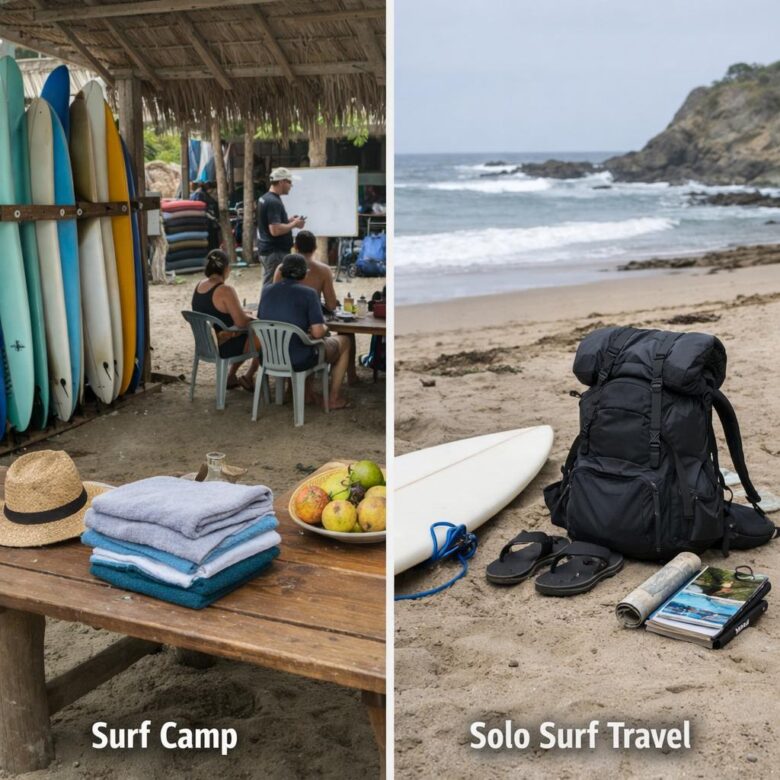
A surf camp usually looks more expensive upfront, but the price often bundles accommodation, surf lessons, board rental, airport transfers, local transport, and sometimes meals. With solo surf travel, you may find cheaper nightly rates on Booking.com or hostels, but you’ll need to price every add-on separately, including surfboard hire, scooter rental, reef booties, travel insurance, and transport to different breaks.
For example, a beginner heading to Bali might pay one fixed surf camp fee that includes daily coaching and equipment. Traveling solo, that same person may save on lodging but spend more than expected on private surf lessons, board rental by the day, taxi apps, and last-minute gear replacement after choosing the wrong board for local conditions.
- Surf camp value: structured coaching, safer spot selection, included equipment, and less planning time.
- Solo travel value: flexible dates, cheaper food choices, more control over accommodation quality, and freedom to chase swell.
- Hidden cost to watch: surfboard airline fees can make bringing your own board more expensive than local rental.
The real budget question is not just “Which is cheaper?” but “What risks and services am I paying to avoid?” If you’re new to a destination, a surf camp can reduce costly mistakes like booking far from the surf zone or missing tide windows. If you’re experienced, using tools like Google Maps, surf forecast apps, and comparison sites can make solo surf travel much more cost-efficient.
How to Compare Your Total Surf Trip Budget Before You Book
To compare a surf camp with solo surf travel fairly, price the full trip-not just the room rate. A $900 surf camp package may look expensive until you add solo costs like airport transfers, board rental, surf lessons, travel insurance, coworking access, and daily transport to surf spots.
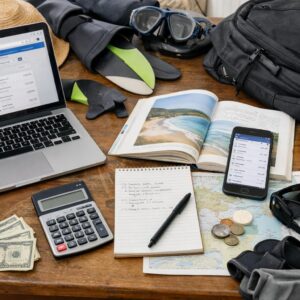
Start with a simple spreadsheet in Google Sheets and create two columns: “Surf Camp” and “Solo Travel.” Then list every cost you will actually pay, including flights, accommodation, meals, surf coaching, equipment rental, baggage fees for boards, local taxis, SIM card or eSIM, and medical insurance with surf coverage.
- Fixed costs: flights, travel insurance, visa fees, airport transfers.
- Daily costs: meals, accommodation, scooter rental, fuel, coworking space.
- Surf-specific costs: board rental, wetsuit rental, lessons, guide fees, reef booties.
For example, in Portugal or Bali, a solo traveler might find a cheap guesthouse, but pay extra each day for scooter rental, board hire, and beginner surf lessons. A surf camp may include those services, plus breakfast and transport to the best break for the conditions, which can reduce unexpected spending.
One real-world insight: solo travel is usually cheaper only if you are confident choosing surf spots, managing logistics, and avoiding last-minute bookings. If you need coaching, gear, and local guidance, bundled surf camp packages can offer better value and fewer budget surprises.
Before booking, check prices on Booking.com, compare flights with Google Flights, and read recent reviews to see what is actually included. The cheapest option on paper is not always the lowest total trip cost.
Budget Mistakes That Make Surf Camps or Solo Trips More Expensive
One of the biggest budget mistakes is comparing only the headline price. A surf camp may look expensive until you realize it includes accommodation, coaching, airport transfers, surfboard rental, and sometimes meals. On the other hand, a “cheap” solo trip can quickly cost more once you add transport to remote breaks, board hire, and daily food costs.
Another common error is ignoring location logistics. For example, staying 30 minutes from the surf spot in Bali or Portugal might save money on the room, but daily scooter rental, fuel, parking, or taxi fares can erase that saving fast. Always check the real door-to-wave cost before booking through platforms like Booking.com or Google Maps.
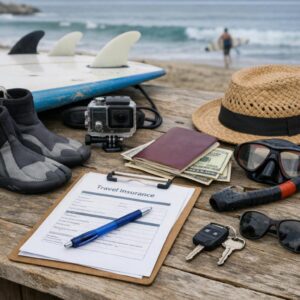
- Skipping travel insurance: Surf injuries, lost luggage, or damaged boards can become expensive without proper coverage.
- Forgetting equipment fees: Airlines may charge high surfboard baggage fees, while camps may include boards in the package.
- Booking last-minute transport: Airport transfers, ferries, and rental cars usually cost more when arranged on arrival.
Solo travelers also underestimate “small” daily costs: reef booties, sunscreen, laundry, SIM cards, bottled water, and café meals between sessions. These are not luxury expenses; they are normal surf travel costs that add up over a week.
For surf camps, the mistake is not checking what is excluded. Ask about wetsuit rental, video analysis, extra surf lessons, equipment damage deposits, and cancellation policies. A slightly higher upfront price can be better value if it reduces surprise costs during the trip.
Key Takeaways & Next Steps
The better budget choice depends on how much structure you need. If you’re a beginner, short on time, or likely to spend extra solving transport, gear, and spot-selection problems, a surf camp can be the smarter value. If you’re experienced, flexible, and comfortable comparing accommodation, rentals, and local transport yourself, solo surf travel often gives you more control over daily costs.
Before booking, price the full trip-not just the headline rate. Include boards, lessons, transfers, meals, and downtime. Choose the option that keeps your spending predictable while still giving you the surf experience you actually want.