Most surfers don’t lose waves because they lack courage-they lose them because they gas out, wobble, or train the wrong muscles.
Surf fitness is not just about doing more push-ups or spending hours in the gym. It is the combination of paddle endurance, rotational strength, balance, mobility, breath control, and recovery.
Train it poorly, and you risk shoulder pain, lower-back strain, and stalled progress. Train it intelligently, and you paddle longer, pop up faster, hold stronger lines, and surf with more confidence in heavier conditions.
This guide breaks down how to improve surf-specific fitness safely, with practical methods that build real performance without beating up your body.
Surf Fitness Fundamentals: Mobility, Core Stability, and Injury Prevention
Good surf fitness starts before you touch the water: your shoulders, hips, thoracic spine, and ankles need enough mobility to paddle efficiently, pop up cleanly, and absorb awkward landings. A tight upper back often forces surfers to overuse the neck and shoulders, which is where many paddling-related aches begin. A simple pre-surf routine with a foam roller, hip openers, and banded shoulder activation can reduce strain without adding much time.
Core stability matters more than endless sit-ups because surfing demands control while your body is rotating, extending, and reacting to an unstable surface. Focus on anti-rotation and bracing drills that transfer well to real waves:
- Dead bugs or bird dogs for low-back control
- Pallof presses with a TheraBand or cable machine
- Side planks with reach-throughs for rail-to-rail stability
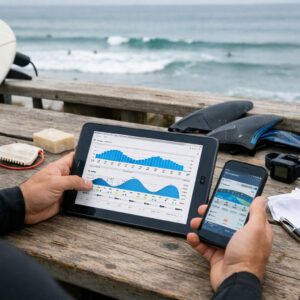
In practice, I’ve seen weekend surfers improve their pop-up consistency simply by adding 10 minutes of hip mobility and core activation before paddling out. One realistic example: if your front foot lands too far back, restricted hip flexion may be part of the problem, not just “bad technique.” Video analysis on a phone, or movement tracking through Garmin Connect, can help identify fatigue patterns and recovery gaps.
For injury prevention, increase training load gradually and treat pain as feedback, not a toughness test. If shoulder pain, lower-back tightness, or knee discomfort keeps returning, a sports physical therapy assessment is usually cheaper than months of missed sessions, new equipment, and trial-and-error recovery products. Smart training protects your surf time.
How to Build Paddle Endurance and Pop-Up Power With Safe Land-Based Training
Paddle endurance comes from repeated pulling strength, shoulder stability, and controlled breathing-not just doing endless push-ups. On land, use resistance bands, a stability ball, or a cable machine to mimic the paddle stroke while keeping your ribs down and neck relaxed. A simple way to track effort is with a heart rate monitor or Garmin fitness watch, especially if you are building cardio conditioning without overtraining your shoulders.
For a practical surf fitness workout, try 3 rounds of:
- Band paddle pulls: 30-45 seconds per side, smooth and controlled
- Incline push-ups or dumbbell floor presses: 8-12 reps for chest and triceps strength
- Pop-up drills on a yoga mat: 5 clean reps, focusing on foot placement, not speed
In real coaching settings, the surfers who improve fastest usually stop treating pop-ups like burpees. They practice low-volume, high-quality reps: hands under the ribs, hips lifting first, front foot landing between the hands, and eyes looking forward. If your knees or lower back feel strained, elevate your hands on a bench to reduce load while keeping the movement pattern close to surfing.
For paddle power, add face pulls, external rotations, and thoracic mobility work twice a week. These small “prehab” exercises are often cheaper than physical therapy later and help protect the rotator cuff, especially for office workers with tight shoulders. Safe land-based training should make you feel more prepared in the water, not sore for three days.
Common Surf Training Mistakes That Limit Balance, Stamina, and Recovery
One of the biggest surf fitness mistakes is training hard but not training specifically. Long gym sessions can build general strength, but if they ignore shoulder endurance, hip mobility, breath control, and rotational core stability, they may not carry over well to paddling or popping up under fatigue.
A common example is the weekend surfer who does heavy bench press twice a week, then wonders why their shoulders burn after 20 minutes in the water. Swapping some of that volume for banded external rotations, prone paddle intervals, and controlled push-up-to-pop-up drills usually delivers better injury prevention benefits.
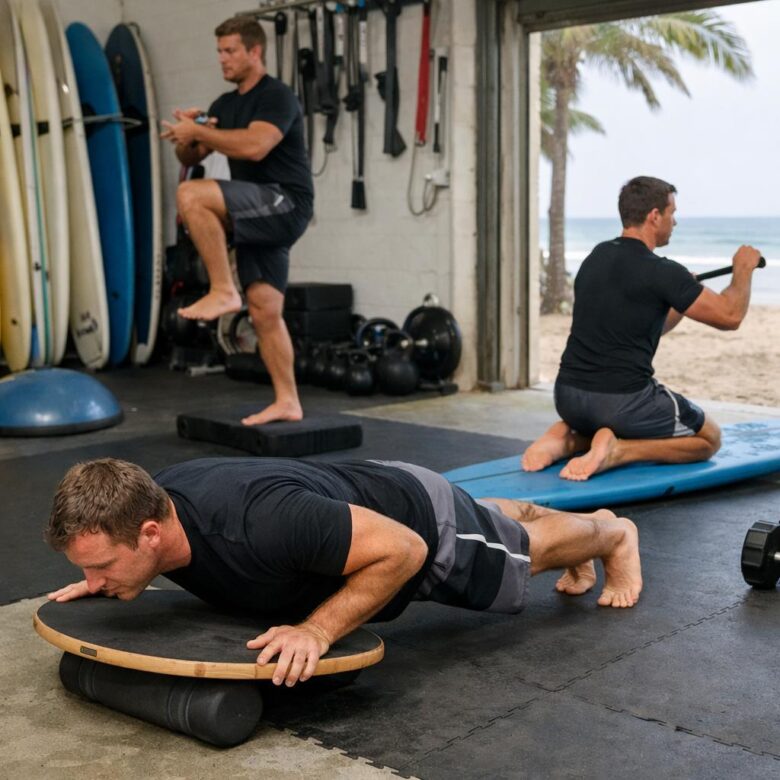
Balance training also gets misused. Standing on a wobble board for random tricks is less useful than practicing surf stance, weight shifts, and single-leg control with good posture, especially when paired with a quality balance board or surf training program.
- Skipping recovery tracking: Use tools like Garmin Connect or WHOOP to monitor sleep, heart rate, and training load before adding more sessions.
- Ignoring shoulder pain: Persistent tightness or pinching should be assessed by a sports physical therapy provider, not trained through.
- Doing only cardio: Paddle endurance improves faster when aerobic work is combined with mobility, strength, and interval training.
Another mistake is treating every workout like a test. Surfing already taxes the nervous system, so smart recovery tools such as mobility apps, massage balls, compression boots, or a heart rate monitor can help manage fatigue and reduce the cost of preventable overuse injuries.
Key Takeaways & Next Steps
Better surf fitness comes from consistency, not intensity alone. Choose exercises that improve control, mobility, and paddle capacity without leaving you too sore to surf. If you are new, returning from injury, or increasing volume, progress gradually and prioritize clean technique over harder sessions.
The smartest approach is simple: train what helps you move better in the water, recover enough to adapt, and stop when pain changes your mechanics. When in doubt, pick the safer option today so you can paddle out stronger tomorrow.