The ocean doesn’t care that it’s your first surf session.
Before you paddle out, you need to understand more than how to stand on a board. Waves, currents, tides, wind, crowds, and hidden hazards can turn a fun beginner session into a dangerous situation fast.
This guide breaks down the essential ocean safety knowledge every new surfer should have before entering the water-from reading conditions and spotting rip currents to choosing the right break and knowing when to stay on the beach.
Surfing is safer, more enjoyable, and far less intimidating when you know what the ocean is doing. Start here before you suit up, wax your board, and paddle into the lineup.
Understanding Surf Zone Hazards: Rip Currents, Waves, Tides, and Local Conditions
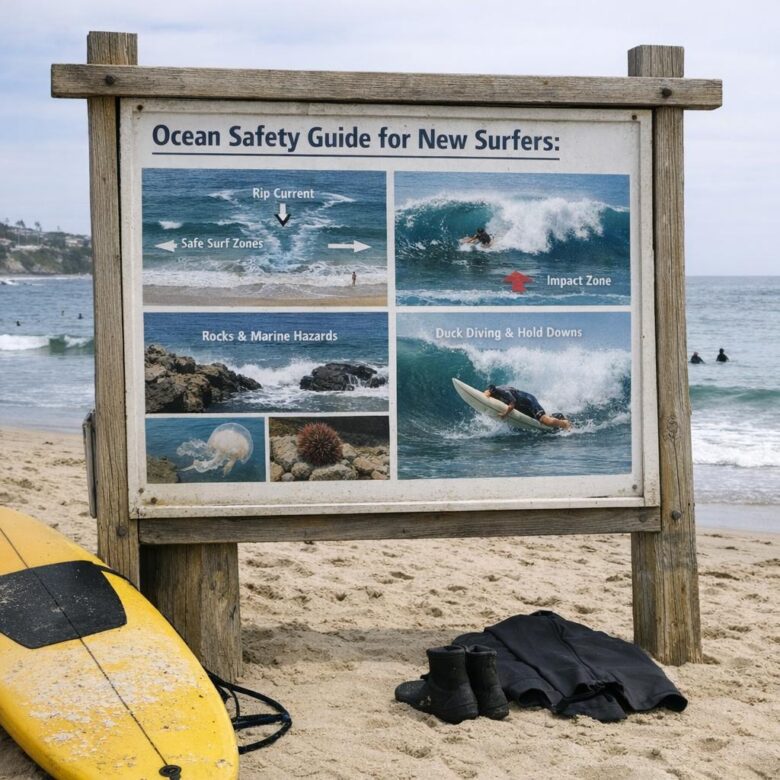
Before paddling out, spend at least 10 minutes watching the water from shore. Look for rip currents, which often appear as darker, smoother channels moving away from the beach, sometimes with foam or sand being pulled seaward. If you get caught in one, do not fight it; float, signal for help, and paddle parallel to the beach until you are out of the current.
Wave size is only part of the risk. A two-foot wave breaking over shallow reef or a steep sandbar can be more dangerous than a larger, softer wave at a beginner-friendly beach. I’ve seen new surfers choose a “small” day, then get surprised because the tide dropped and the waves started dumping hard in knee-deep water.
- Check tide charts: Some breaks are safer at mid tide, while low tide may expose rocks, reef, or strong shorebreak.
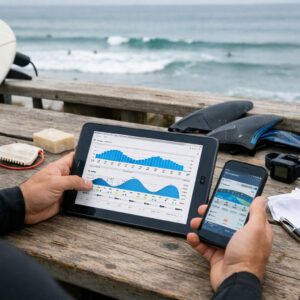
- Use a surf forecast tool: Platforms like Surfline or Magicseaweed can help you compare swell height, wind direction, tide, and local reports.
- Ask a local lifeguard: They often know the day’s safest entry points, rip current zones, and whether conditions are suitable for beginner surf lessons.
Wind matters too. Offshore wind can make waves look clean but may push you farther from shore, while strong onshore wind creates messy, tiring conditions. For safer sessions, combine your surf forecast app with a local beach safety report, and consider basic safety equipment such as a well-fitted leash, soft-top surfboard, and high-visibility rash guard.
Pre-Surf Safety Checklist: How to Read the Beach, Choose a Beginner-Friendly Spot, and Enter Safely
Before you paddle out, spend at least 10 minutes watching the ocean from the sand. Check the surf forecast on Surfline or Magicseaweed-style reports for wave height, wind direction, tide changes, and rip current warnings, then compare that with what you actually see at the beach.
A beginner-friendly surf spot should have small, spilling waves, a sandy bottom, clear entry points, and other learners nearby. Avoid steep dumping waves, rocky shorelines, strong shorebreak, or crowded peak areas where experienced surfers are taking off fast.
- Look for rip currents: darker, choppy channels, fewer breaking waves, or foam moving steadily offshore.
- Check your gear: secure leash, beginner surfboard with enough volume, properly fitted wetsuit, and reef-safe sunscreen.
- Choose your zone: stay near lifeguards and away from piers, jetties, rocks, and surf schools running lessons.
A real-world example: if the forecast says 2-3 feet but you arrive and see waves closing out across the whole beach with nobody making clean rides, that is not a good beginner session. It may be safer to book a certified surf lesson, rent a soft-top board, or wait for a lower tide window with cleaner conditions.
Enter the water slowly and keep your board beside you, never between your body and an incoming wave. If you feel a strong pull seaward or cannot touch the bottom comfortably, stop early-walking back to the beach is always cheaper than an emergency rescue or injury treatment.
Common Beginner Surfing Mistakes That Increase Ocean Risk-and How to Avoid Them
One of the biggest beginner mistakes is paddling out without reading the surf forecast. Wave height alone is not enough; swell period, wind direction, tide, and rip current risk matter just as much. Before leaving home, check a reliable surf forecast app like Surfline and compare it with local lifeguard updates when available.
Another risky habit is choosing the wrong board or leash. A short performance board may look exciting, but it is harder to paddle, less stable, and more tiring in real conditions. For most new surfers, a soft-top longboard, a properly fitted leash, and basic surf lessons are a safer investment than buying advanced surf gear too early.
- Ignoring rip currents: If you are drifting sideways faster than you can paddle back, do not fight straight toward shore; paddle parallel first, then angle in.
- Sitting in the impact zone: Beginners often wait where waves are breaking hardest. Watch where experienced surfers sit before entering.
- Surfing alone: Even small waves can become dangerous if your leash snaps, you cramp, or visibility drops.
A real-world example: a calm-looking beach can become difficult at mid-tide when sandbars create stronger channels. I have seen new surfers paddle out easily, then struggle for 20 minutes trying to return because they entered near a rip without noticing it.
To reduce ocean risk, start at lifeguarded beaches, take beginner surf coaching if possible, and carry practical safety equipment such as a quality leash, reef-safe sunscreen, and a bright rash guard. Small choices make a big difference.
Final Thoughts on Ocean Safety Guide for New Surfers: What to Know Before Entering the Water
Safe surfing starts before the first paddle. If the conditions, your energy level, or your confidence do not feel right, sitting out is the smarter call-not a missed opportunity.
- Choose beginner-friendly breaks with lifeguards when possible.
- Check swell, wind, tides, and currents before entering.
- Respect your limits and surf with someone more experienced.
- When in doubt, stay on the beach and watch the ocean longer.
The best surfers are not the ones who ignore risk; they are the ones who read the water, make calm decisions, and come back safely for the next session.