Choosing the wrong surfboard can slow your progress before you even catch a wave.
Your board is not just equipment-it controls how easily you paddle, balance, turn, and recover from mistakes. The right choice can make surfing feel natural; the wrong one can make every session frustrating.
Whether you are standing up for the first time, trimming down the line, or starting to carve with confidence, your skill level should guide the board’s size, shape, volume, and fin setup.
This guide breaks down how to match a surfboard to where you are now-so you can catch more waves, build better technique, and avoid outgrowing your board too soon.
Surfboard Size, Volume, and Shape Explained for Beginner, Intermediate, and Advanced Surfers
Surfboard size is not just about length; volume and shape matter just as much. Volume, measured in liters, affects flotation, paddle power, and stability, which is why many surfboard volume calculators, including tools on Boardcave, ask for your weight, fitness, wave type, and skill level before suggesting a board.
Beginners usually benefit from a longer, wider board with higher volume because it makes paddling easier and helps you catch waves earlier. For example, a 75 kg beginner may progress faster on an 8-foot foam surfboard or mini malibu than on a low-volume shortboard, even if the shortboard looks more “advanced.”
- Beginner: Choose high volume, rounded rails, and a stable outline for easier balance and safer wipeouts.
- Intermediate: Move toward a funboard, fish, or hybrid surfboard that still paddles well but turns more sharply.
- Advanced: Use lower-volume performance shortboards, step-ups, or specialty boards matched to wave size and speed.
Shape controls how the board feels under your feet. A wider nose adds stability, a pulled-in tail improves control in steeper surf, and more rocker helps fit into hollow waves but can reduce paddle speed.
A practical way to choose is to match the board to your real surf conditions, not your dream conditions. If your local beach break is mostly soft, waist-high surf, a slightly fuller hybrid may offer better value, lower frustration, and more water time than an expensive high-performance shortboard.
How to Match Your Surfboard to Your Skill Level, Body Weight, and Local Wave Conditions
The right surfboard size is a mix of skill level, body weight, fitness, and the waves you actually surf-not the waves you wish you surfed. A beginner who weighs 85 kg will usually progress faster on a high-volume foam board or longboard than on a shortboard, even if the shortboard looks more exciting.
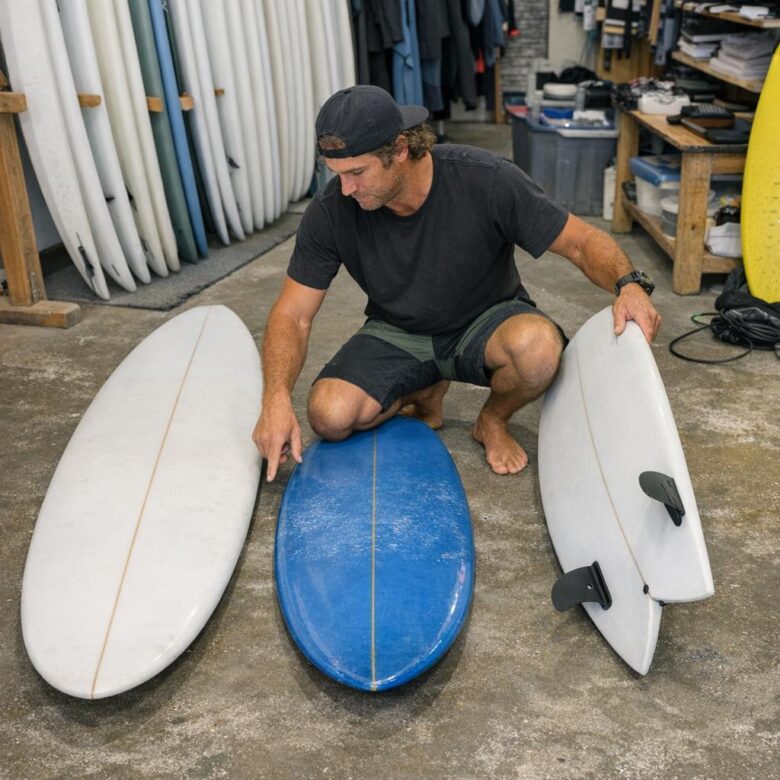
Use a surfboard volume calculator or surfboard sizing chart as a starting point, but don’t treat it like a final answer. In real surf shops, I’ve seen intermediate surfers improve quickly just by adding 3-5 liters of volume because their local beach break was weak, crowded, and hard to paddle into.
- Beginners: Choose more volume, width, and stability. Foam surfboards and mini mals are safer, easier to paddle, and better for learning wave timing.
- Intermediate surfers: Match the board to your common conditions. A fish or hybrid surfboard works well in smaller, softer waves, while a performance shortboard needs more speed and cleaner surf.
- Advanced surfers: Fine-tune rocker, rails, fin setup, and construction cost based on wave power, travel plans, and durability needs.
Check your local forecast on Surfline before buying. If your beach usually has 1-3 foot mushy waves, a low-volume shortboard will feel frustrating, no matter how good the surfboard reviews are.
A practical example: a 70 kg beginner surfing small summer waves might choose an 8’ foam board around 60+ liters, while a 70 kg intermediate surfer in the same waves may prefer a 5’8”-6’0” fish with enough volume to keep speed through flat sections.
Common Surfboard Buying Mistakes That Slow Progress and How to Avoid Them
One of the biggest mistakes beginners make is buying a board that looks exciting but does not match their current ability. A narrow shortboard may feel like a “performance” upgrade, but if you cannot catch waves consistently, it will slow your paddling, timing, and confidence.
In surf shops, I often see new surfers skip over volume, width, and rocker because they focus only on length or brand name. Use a surfboard volume calculator from Boardcave or compare manufacturer size charts before you buy, especially if you are shopping online for used surfboards or discount surf gear.
- Buying too small too soon: Choose enough volume to paddle easily and catch more waves per session.
- Ignoring local wave conditions: A board for steep reef breaks may be frustrating at a soft beach break.
- Choosing price over fit: The cheapest surfboard can cost more long term if you outgrow it badly or need repairs fast.
A real-world example: a 75 kg beginner choosing a 6’0” low-volume shortboard for small summer waves will likely struggle, while an 8’ foam surfboard or high-volume funboard makes practice far more productive. More waves caught means faster improvement.
Before purchasing, ask about surfboard volume, fin setup, construction type, repair cost, and resale value. If possible, rent or demo a similar board first; many surf schools and rental services offer daily board hire, which is cheaper than making an expensive mistake.
The Bottom Line on How to Choose the Right Surfboard for Your Skill Level
Choosing the right surfboard comes down to one honest question: will this board help you catch more waves and improve with confidence? For most surfers, the best choice is not the flashiest shape, but the one that matches current ability, local conditions, and realistic goals.
- Prioritize stability and paddle power if you are still building fundamentals.
- Choose more responsive designs only when control and wave reading feel consistent.
- When unsure, go slightly more forgiving rather than overly advanced.
A well-matched board makes progress smoother, sessions more enjoyable, and every wave a better learning opportunity.