What if your “lack of talent” is really just a few bad habits slowing you down?
Most beginner surfers don’t struggle because they’re not fit enough, brave enough, or young enough. They struggle because small mistakes-poor positioning, rushed pop-ups, bad wave choice, and ignoring surf etiquette-compound every session.
The frustrating part is that these mistakes often feel normal at first. You paddle hard, miss waves, get in the way, wipe out early, and assume that’s just how learning goes.
This guide breaks down the beginner surfing mistakes that quietly delay progress, so you can fix them early and make every session count.
Why Beginner Surfers Struggle to Progress: Core Technique and Ocean Awareness Basics
Most beginner surfers do not progress slowly because they lack courage; they struggle because their fundamentals are inconsistent. A common example is paddling hard for a wave but lying too far back on the board, which makes the nose lift, slows momentum, and causes the wave to pass underneath.
Small technique errors compound quickly in surfing. If your pop-up is late, your feet land too wide, or your eyes look down instead of toward the open face, even a good beginner surfboard will feel unstable. This is where a surf lesson, video analysis, or a waterproof action camera can be worth the cost because you can actually see what your body is doing.
- Paddling position: Keep the board flat and moving early, not only when the wave is already lifting you.
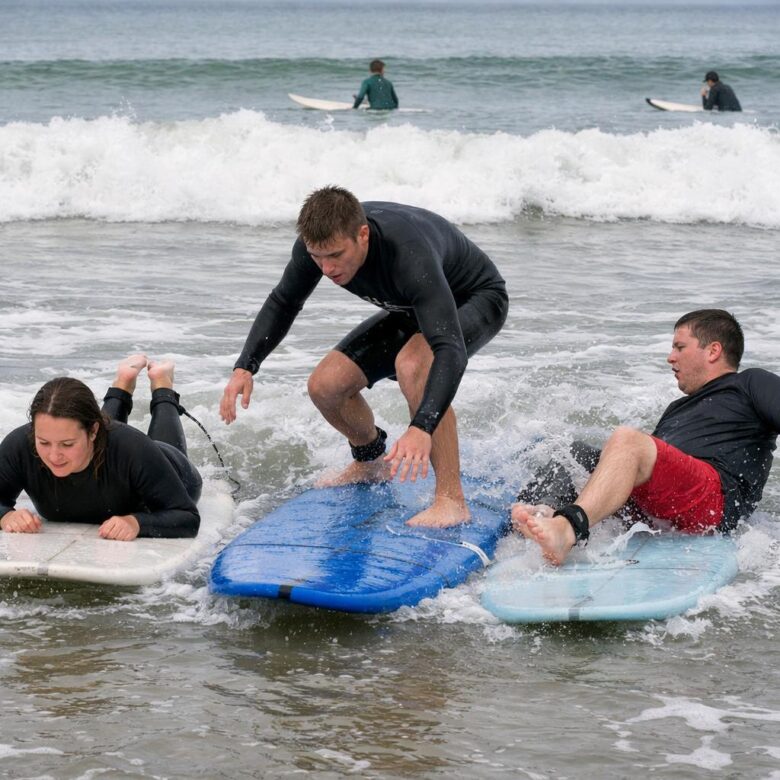
- Pop-up timing: Stand as the board starts gliding, not after the whitewater has already taken control.
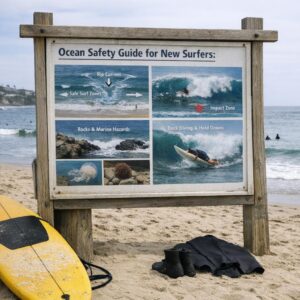
- Ocean awareness: Watch where waves break, where rips pull, and where experienced surfers sit.
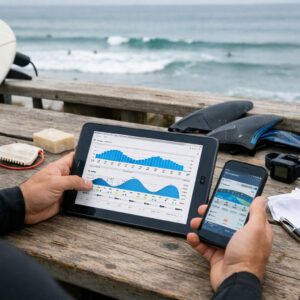
Tools like Surfline can help beginners check wave height, wind direction, tide, and surf forecast conditions before choosing a spot. For example, a clean two-foot day at a sheltered beach is usually better for skill development than a messy four-foot day with strong offshore current.
In real surf coaching sessions, the biggest improvements often come from reading the ocean before paddling out. Spend five minutes observing the lineup, then choose a clear takeoff zone. Better wave selection means more successful rides, fewer wasted paddles, and faster confidence building.
How Poor Paddling, Pop-Up Timing, and Wave Selection Slow Surfing Improvement
Many beginner surfers think they need a better board, when the real issue is often paddling efficiency, late pop-ups, and choosing waves that never give them a fair chance. If you are always tired before the wave arrives, your stance, balance, and confidence will suffer, even with quality surf lessons or an expensive beginner surfboard.
Paddling too high on the board, lifting your head too much, or using short, splashy strokes creates drag. A useful real-world fix is to have someone film you from the beach with a GoPro or phone zoom, then check whether your board is trimming flat or pushing water from the nose. Small positioning changes can save energy fast.
- Paddling: keep your chest slightly lifted, strokes long, and board level.
- Pop-up timing: stand as the wave starts carrying you, not after it has already steepened.
- Wave selection: choose clean, rolling whitewater or soft green waves before chasing steep peaks.
In coaching sessions, one common pattern is beginners paddling for closeout waves because they look powerful from shore. The result is repeated wipeouts, wasted rental time, and frustration. Learning to read wave shape, shoulder direction, tide conditions, and lineup spacing is often more valuable than buying premium surf gear too early.
If progress feels slow, track one session at a time: how many waves you attempted, how many you caught, and where your pop-up failed. Simple notes in Surfline forecasts or a training app can reveal whether your main problem is fitness, timing, or poor wave choice.
Common Beginner Surfing Mistakes to Fix for Faster, Safer Progress
One of the biggest beginner surfing mistakes is using the wrong board. A shortboard may look exciting, but most new surfers progress faster on a soft-top longboard because it offers better stability, easier paddling, and fewer painful wipeouts. If you are paying for surf lessons or surfboard rental, ask the surf school for a board that matches your weight, fitness level, and local wave conditions.
Another common issue is ignoring surf forecasts. Before heading out, check wave height, tide, wind direction, and crowd levels on Surfline or Magicseaweed alternatives. For example, a beginner choosing clean 1-2 foot waves at mid tide will usually learn more in one hour than someone fighting choppy 4-foot surf all morning.
- Paddling too late: Start paddling before the wave reaches you, not when it is already lifting the tail of your board.
- Standing too tall: Keep your knees bent and eyes forward to improve balance and reduce falls.
- Skipping surf etiquette: Learn right of way, avoid dropping in, and never ditch your board near other surfers.
Safety gear also matters more than many beginners think. A good leash, properly fitted wetsuit, reef-safe sunscreen, and beginner-friendly fins can prevent injuries and make longer sessions more comfortable. I often see new surfers quit early simply because they are cold, sunburned, or using cheap gear that does not fit.
Finally, do not measure progress only by how many waves you stand up on. Better paddling fitness, cleaner pop-ups, smarter positioning, and safer wipeouts are real progress too.
Closing Recommendations
Progress in surfing usually comes from making better decisions, not forcing more sessions. Choose manageable waves, respect your limits, and build solid fundamentals before chasing speed, size, or advanced maneuvers. If something feels inconsistent, simplify: check your positioning, timing, board choice, and fitness before blaming talent.
The smartest beginner path is to practice with patience, get feedback when possible, and measure improvement by control and confidence-not by how quickly you move to harder conditions. Avoiding common mistakes will not make surfing easy, but it will make every session more useful.