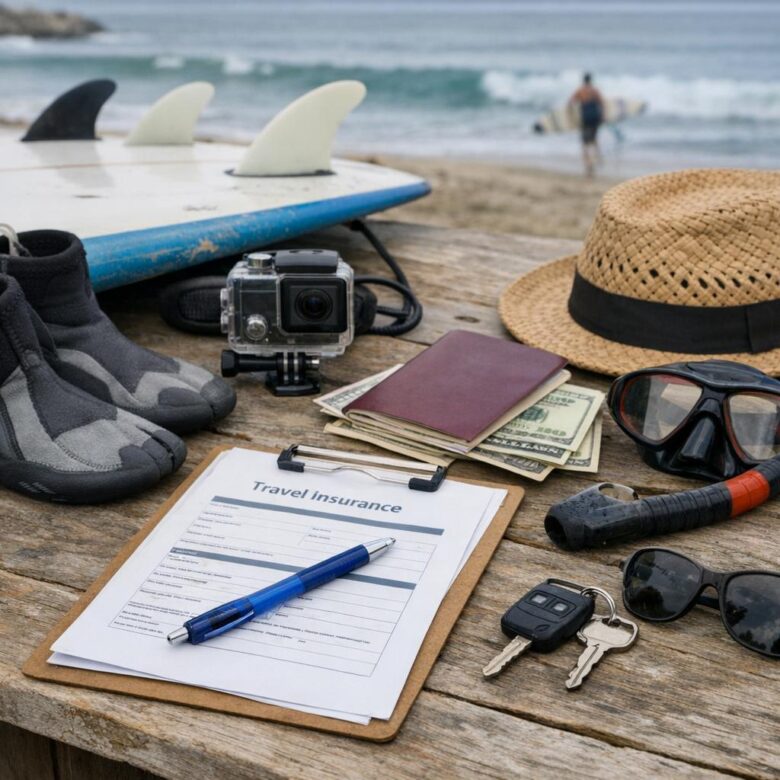
Will your travel insurance still cover you if the injury happens past the break?
Surf trips carry risks most standard policies don’t fully account for: reef cuts, board collisions, remote medical care, missed swell windows, and gear worth more than your flight.
The fine print matters because “water sports” can mean anything from casual snorkeling to big-wave surfing, and insurers often draw strict lines around risk, competition, and rescue costs.
Before you book the next strike mission, know what coverage to look for, what exclusions to avoid, and how to protect yourself when the ocean-or the airline-doesn’t cooperate.
What Surf Trip Travel Insurance Must Cover: Medical Evacuation, Board Damage, and Water Sports Risks
Surf travel insurance should do more than cover a missed flight. If you are surfing in remote breaks like Mentawai, Siargao, or parts of Costa Rica, the biggest risk is often access to proper medical care, not the injury itself. Look for emergency medical evacuation coverage that can pay for ambulance boats, air evacuation, hospital transfer, and repatriation if the local clinic cannot treat a reef cut, concussion, or broken rib.
Water sports coverage must specifically include surfing, not just “recreational activities.” Some standard travel insurance policies exclude ocean sports, competitions, big-wave surfing, or riding outside marked areas. Before buying, check the policy wording for:
- Emergency medical expenses and medical evacuation insurance
- Surfboard damage, theft, airline baggage loss, and sports equipment cover
- Personal liability if you injure another surfer or damage rental property
Board coverage is easy to underestimate. A cracked rail during airline handling or a snapped board on day one can turn into a costly replacement, especially if you are traveling with a custom shortboard or epoxy longboard. Take timestamped photos before departure and keep airline baggage reports, repair invoices, and purchase receipts; insurers often ask for proof.
A practical tip: compare adventure travel insurance on platforms like InsureMyTrip, then read the exclusions directly from the insurer before paying. I’ve seen surfers assume their premium credit card travel insurance covered them, only to find surfboards were capped as ordinary baggage and medical evacuation required pre-approval. The cheapest policy is rarely the best if it leaves out the exact risks that make surf trips expensive.
How to Compare Surf Travel Insurance Policies Before Booking an International Surf Trip
Start by checking whether surfing is listed as a covered activity, not just “water sports.” Some travel insurance policies exclude surfing in remote locations, reef breaks, competitions, or trips where you are paid to surf, so read the adventure sports section before looking at price.
Compare the policy limits that matter most on a surf trip: emergency medical coverage, medical evacuation, trip cancellation, baggage protection, and coverage for surfboards or sports equipment. A cheap plan may look fine until you realize it only covers a damaged board up to a low limit or excludes airline handling damage.
- Medical evacuation: important for surf zones far from major hospitals, such as Mentawai, Samoa, or parts of Central America.
- Gear coverage: check per-item limits for surfboards, wetsuits, cameras, and GPS watches.
- Trip interruption: useful if a cyclone, injury, or airline cancellation forces you to change flights and accommodation.
Use a comparison platform like Squaremouth or InsureMyTrip to filter policies by adventure sports coverage, then open the policy wording before buying. I’ve seen travelers assume their board bag was covered, only to find the insurer treated it as “specialty sports equipment” with stricter limits.
Also compare deductibles, claims process, 24/7 emergency assistance, and whether the insurer pays hospitals directly or reimburses you later. For international surf travel insurance, the best value is usually the policy that matches your destination risk, gear value, and medical access-not simply the lowest premium.
Common Surf Travel Insurance Exclusions and Claim Mistakes to Avoid
Surf travel insurance can look solid at checkout, but the fine print matters. Many standard travel insurance policies exclude “high-risk” or “adventure sports” unless you add a specific water sports coverage upgrade, especially for big-wave surfing, competitions, tow-in surfing, or surfing in areas under official travel advisories.
One common mistake is assuming your surfboard is fully covered under baggage insurance. Some insurers cap sports equipment reimbursement or exclude damage during use, so a cracked board after an airline transfer may be covered, while a snapped board at Uluwatu may not. Always check the single-item limit, deductible, and whether surfboard insurance includes repair costs, replacement value, or only depreciated value.
- Medical exclusions: Injuries while intoxicated, ignoring local warnings, or surfing outside permitted areas can void emergency medical coverage.
- Trip cancellation errors: Bad swell is not a covered reason unless you bought “cancel for any reason” coverage.
- Claim documentation: Missing police reports, airline damage reports, receipts, or medical invoices can delay or reduce payouts.
A real-world example: if your board bag arrives crushed in Bali, report it to the airline before leaving the airport and get a written Property Irregularity Report. Then take photos immediately and store receipts in a cloud folder using Google Drive or your insurer’s claims app. Small details make a big difference.
Before paying for a policy, compare exclusions through platforms like Squaremouth or read the insurer’s sample certificate. The cheapest travel insurance quote is rarely the best value if it skips emergency medical evacuation, sports equipment coverage, or adventure activity benefits.
Summary of Recommendations
The right surf travel insurance is the one that matches how you actually ride. Before you buy, check whether surfing is covered as a standard activity, whether larger waves, competitions, remote breaks, or rented gear are excluded, and whether emergency evacuation is strong enough for your destination.
Choose based on risk, not just price: a mellow beach break holiday needs different protection than a boat-access reef trip. If the policy wording is vague, ask the insurer in writing before you travel. Clear coverage lets you focus on the waves-not the financial fallout if something goes wrong.